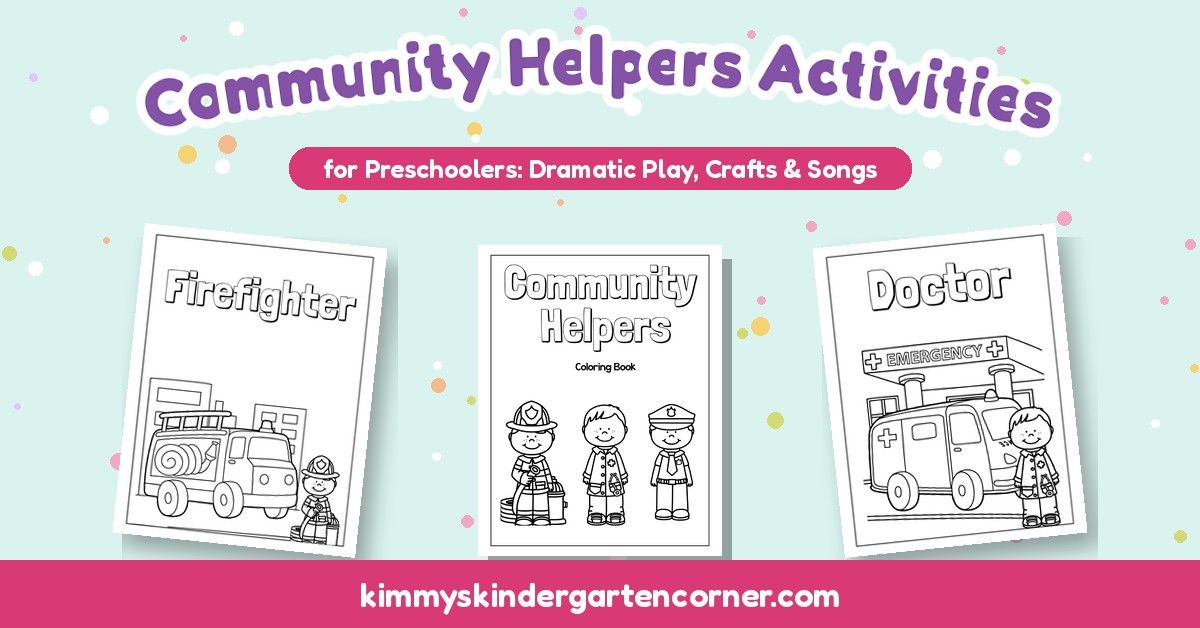
Community Helpers Activities for Preschoolers: Dramatic Play, Crafts & Songs
One of my favorite weeks of the year starts with a simple question at circle time: “Who helps us in our neighborhood?” Hands shoot up. “The firefighter!” “The doctor!” “The person who brings our mail!” Before long, my little ones are pulling on play helmets and writing scribbled letters.
After more than ten years of teaching little ones, I have learned that preschoolers understand jobs best when they can see the helper, use the tools, and pretend to do the work. In this post I am sharing my favorite community helpers activities for preschoolers, including circle time ideas, dramatic play, crafts, songs, books, sensory play, a visitor plan, and a weekly plan you can use right away.
Everything here is written for neighborhood community workers. It works in a preschool classroom, a homeschool, or around your kitchen table.
What Are Community Helpers for Preschoolers?
Here is how I explain it to little ones: “A community is the people who live and work near us. Community helpers are the people whose jobs help our neighbors stay safe, healthy, and cared for.” We talk about the firefighter who puts out fires and the mail carrier who brings letters to our homes.
I start with the helpers children recognize most easily, then add a few that surprise them, like a sanitation worker or a baker. The goal is not a long list of job titles. It is for children to notice the people around them and feel thankful for their work.
Community Helpers You Can Teach This Week
These are the neighborhood workers I come back to again and again:
- Firefighter: keeps us safe and puts out fires.
- Police officer: helps people follow the rules and stay safe.
- Doctor and nurse: help our bodies feel better.
- Mail carrier: brings letters and packages to our homes.
- Construction worker: builds and fixes roads, houses, and schools.
- Bus driver: takes people where they need to go.
- Baker: makes bread and treats for the neighborhood.
- Mechanic: fixes cars, buses, and trucks.
- Sanitation worker: keeps our streets and homes clean.
- Farmer: grows the food we eat.
- Teacher: helps children in our community learn.
Teacher tip: keep the language concrete. Instead of a long job description, I say, “This helper drives a big truck and takes our trash so our neighborhood stays clean.”
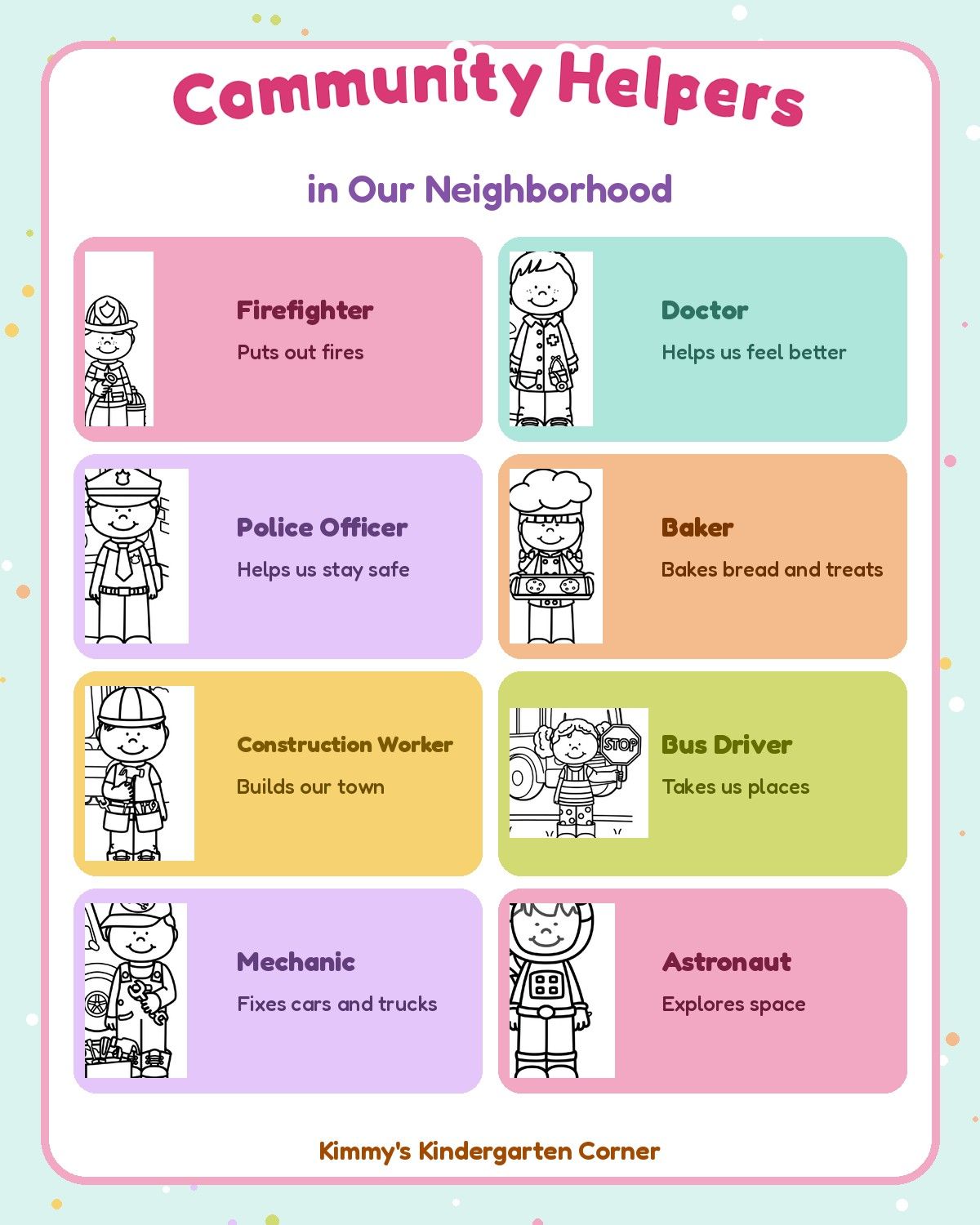
A simple neighborhood chart like this is a great visual for circle time. Point to one helper a day, name the job, and ask, “How does this person help our neighbors?”
Learning Goals and Materials for a Community Helpers Theme
Learning Goals
These are the goals I keep on my plan:
- Identify familiar community helpers and describe, in simple words, what each one does.
- Match helpers to their tools, vehicles, and workplaces.
- Build vocabulary: helper, neighborhood, tools, uniform, vehicle, and the job names themselves.
- Practice kindness and gratitude by saying thank you to the people who help us.
- Use language in dramatic play and strengthen fine motor skills through coloring, cutting, writing, and sensory play.
Materials You Probably Already Have
You do not need a closet full of costumes. I pull from this simple supply list:
- Envelopes, paper, stickers, crayons, and a shoebox mailbox.
- A toy stethoscope, bandages, baby dolls, and a clipboard.
- Rain boots, a raincoat, and a toy hose or short pool noodle.
- Cardboard boxes, toy tools, blocks, and paper “blueprints.”
- Hats, bags, and name tags the children can help make.
- Picture books, a few toy tools, shredded paper, scoops, and toy trucks.
If you like to map the week before it starts, my free preschool lesson planner makes it easy to jot down one helper, one book, and one center for each day.
How to Teach Community Helpers to Preschoolers
Before we get to the activities, here are the four things that make the biggest difference with this age group:
- One helper at a time. A long list of jobs in one morning is too much. I focus on one community helper, or a pair who work closely together, for a day or two.
- Start with tools and vehicles. A helmet, a mailbox, or a toy fire truck is much easier to understand than a job title.
- Keep lessons short, then play. Ten to fifteen minutes of circle time is plenty. The real learning happens later, when they put on the hat and do the job themselves.
- Connect it to real people. Name the helpers your children have already seen, like the bus driver who waves in the morning. When a real visitor can come, even better.
If you want help sketching a five-day flow, I also walked through a Community Helpers weekly-plan example in my post on using ChatGPT in the preschool classroom.
Community Helpers Activities for Preschoolers
Here are the activities I reach for first when I plan community helpers activities for preschoolers. They are low-prep, they get children talking, and they work in a full classroom or a small group at home.
Mystery Tool Bag
Fill a cloth bag with one tool for each helper you are teaching that week, such as a toy stethoscope, an envelope, a whistle, or a play hammer. One child reaches in, feels the object, and guesses what it is. Then the group names which community helper uses that tool.
Who Am I? Clue Game
Give three short clues, one at a time. For example: “I wear a helmet. I ride on a big red truck. I spray water with a hose.” Children raise a hand when they know the answer. After a few days, let the children give the clues.
Thank-You Notes for Neighborhood Helpers
Set out paper, crayons, and envelopes and invite children to make a card for a real community helper. A three-year-old might draw a fire truck and dictate, “Thank you for keeping us safe.” Deliver the cards to a fire station, post office, or clinic. It quietly teaches gratitude and gives children a reason to write.
Community Helpers Circle Time Ideas
Circle time is where I introduce the helper of the day. Here is the simple routine I use, about 10 to 15 minutes total:
- Welcome song (1-2 minutes). Sing your usual hello song so children know circle time has started.
- Mystery tool or hat (2 minutes). Pull one object from the bag and let children guess today’s helper.
- Picture and job talk (3 minutes). Show a picture and ask what the person does, what tools they use, and how they help our neighbors.
- Read-aloud (4-5 minutes). Read a short book, or just a few pages of a longer one, and pause to name the jobs you see.
- Song or movement (2 minutes). Sing one of the songs below, or act out the job: steer a bus, listen to a heartbeat, or march in firefighter boots.
- Closing question (1 minute). “How can we be helpers in our neighborhood today?”
Keep a simple neighborhood chart on the wall and add a picture or name card for each helper you meet. For more everyday ideas to mix with this theme, see my roundup of fun and easy preschool activities.
Community Helpers Dramatic Play Centers
Dramatic play is where a community helpers theme really comes alive. I usually run one or two centers at a time so the play stays rich and I can join the conversation.
Fire Station
Add rain boots, raincoats or red shirts, a toy hose, and a cardboard-box fire truck. This is also a gentle way to talk about fire safety: firefighters help people, smoke alarms keep us safe, and we go to our meeting place if there is a drill. Keep the tone calm. Preschoolers do not need scary details.
Doctor’s Office
Stock a table with baby dolls, a toy stethoscope, bandages, a clipboard, and a sign-in sheet. Children take turns as the doctor, the nurse, the patient, and the person at the front desk, and “write” notes about each patient. With stuffed animals, the same materials become a veterinary clinic the next week.
Post Office
Set up envelopes, paper, stickers, and a shoebox mailbox. Children “write” letters to classmates or family, then a mail carrier delivers the mail around the room. I write each child’s name on a paper mailbox so the carrier has a clear job, and name writing happens without a worksheet.
Construction Site
Put out blocks, toy tools, safety vests or yellow shirts, paper cones, and a few pencil-drawn blueprints. Children can build a road, a bridge, or a whole town with toy vehicles and community signs. Walk over and ask, “What are you building? Who will use it?”
Community Helpers Crafts for Preschoolers
These crafts are made for little hands. No glue guns, no tricky cutting if you prep the pieces, and plenty of room for children to do the work themselves.
Firefighter Hat
Cut a simple hat shape from red construction paper, or fold and paint a paper plate red, and add a yellow shield in the middle. Children decorate the shield and wear the hat in the fire station center.
Mail Carrier Bag
Staple or tape two sheets of construction paper together on three sides to make a bag, then add a yarn strap. Children decorate the bag and fill it with the letters they wrote at the post office.
Community Helpers Coloring Pages
Coloring is one of my favorite calm ways to introduce the helper of the day. I put out a page at morning work or at a quiet center and ask, “What does this helper do? What tools do you see?”
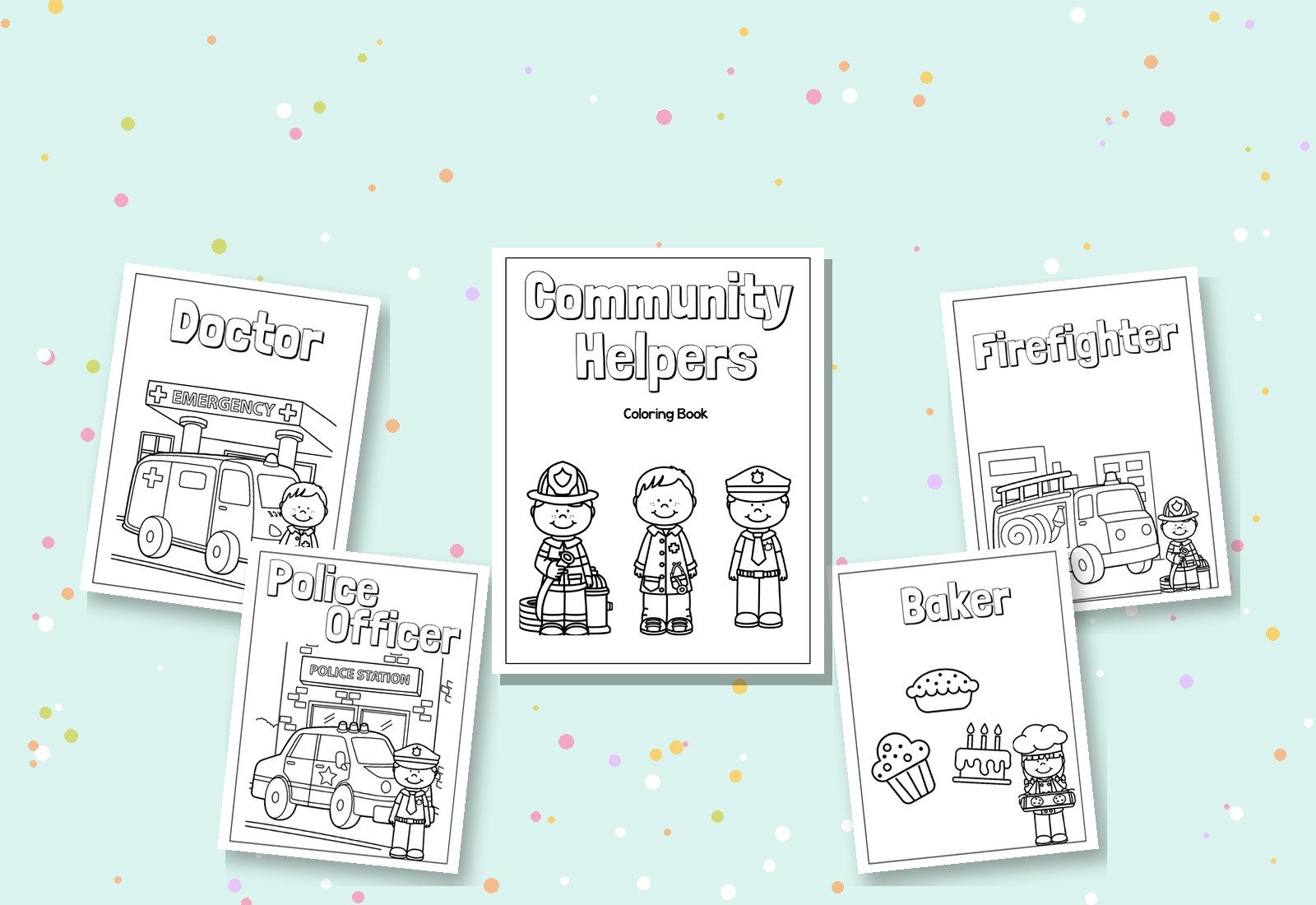
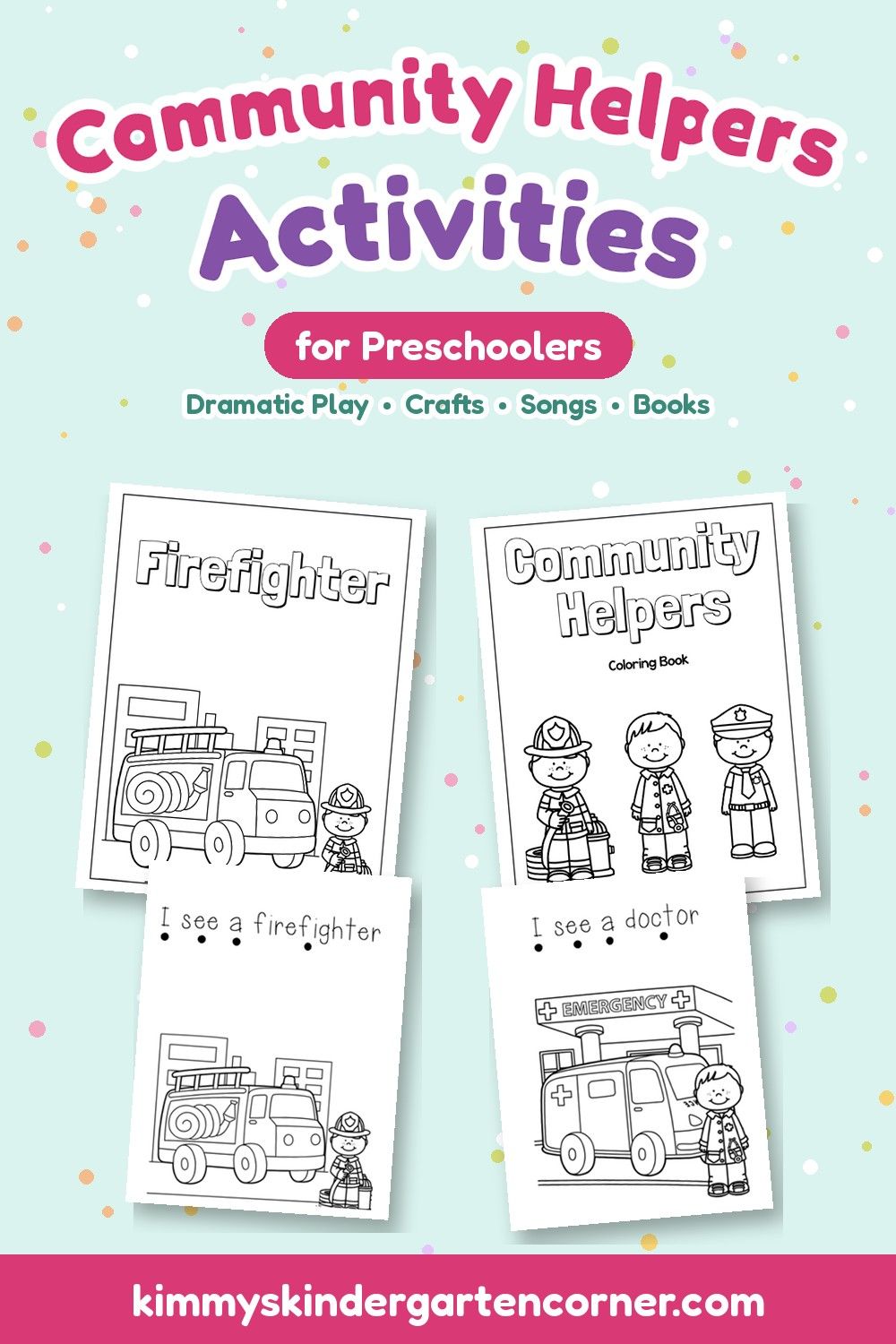
I made a set of Community Helpers Coloring Pages just for this kind of week. It includes a coloring book cover and pages for a doctor, firefighter, baker, mechanic, police officer, construction worker, bus driver, sanitation worker, and astronaut. They are ready to print for morning work, centers, early finishers, or a take-home packet.
Community Helpers Songs for Preschoolers
Music is how preschoolers remember almost everything. Here are two short songs I sing to familiar tunes, so you can start them today without learning new music.
People Who Help Us (Tune: The Wheels on the Bus)
The firefighter in our town says, “Stay safe, stay safe, stay safe.” The firefighter in our town helps us stay safe.
The doctor in our town says, “Feel better, feel better, feel better.” The doctor in our town helps us feel better.
The mail carrier in our town says, “Here’s your mail, here’s your mail, here’s your mail.” The mail carrier in our town brings us our mail.
Keep adding verses for the helpers you are studying that week, and add motions for each job.
Who Helps Us? (Tune: Twinkle, Twinkle, Little Star)
Who helps us in our town each day? Helpers work and helpers play. Firefighters, doctors too, mail carriers who come to you. Thank you, helpers, for your care. You help people everywhere.
Community Helpers Books for Preschoolers
These are books I trust with preschoolers, because the pictures do a lot of the teaching.
- Clothesline Clues to Jobs People Do by Kathryn Heling and Deborah Hembrook. Children guess each job from the clothes and tools hanging on the line.
- Whose Hat Is This? and Whose Tools Are These? by Sharon Katz Cooper. Simple nonfiction with clear photos for matching hats and tools to helpers.
- What Do People Do All Day? by Richard Scarry. Too long to read cover to cover at circle time, so I pick one or two pages and leave the book out for browsing.
- Career Day by Anne Rockwell and The Night Worker by Kate Banks. One is a gentle story about the jobs people do, and the other is a reminder that some community helpers work while we sleep.
When we finish a story, I ask two questions: “Which helper did you notice?” and “How did that person help someone?”
Community Helpers Emergent Readers
After we have met a few helpers, I like to put a simple predictable book in children’s hands. Hearing a story is wonderful. Being able to “read” a pattern themselves feels even better.
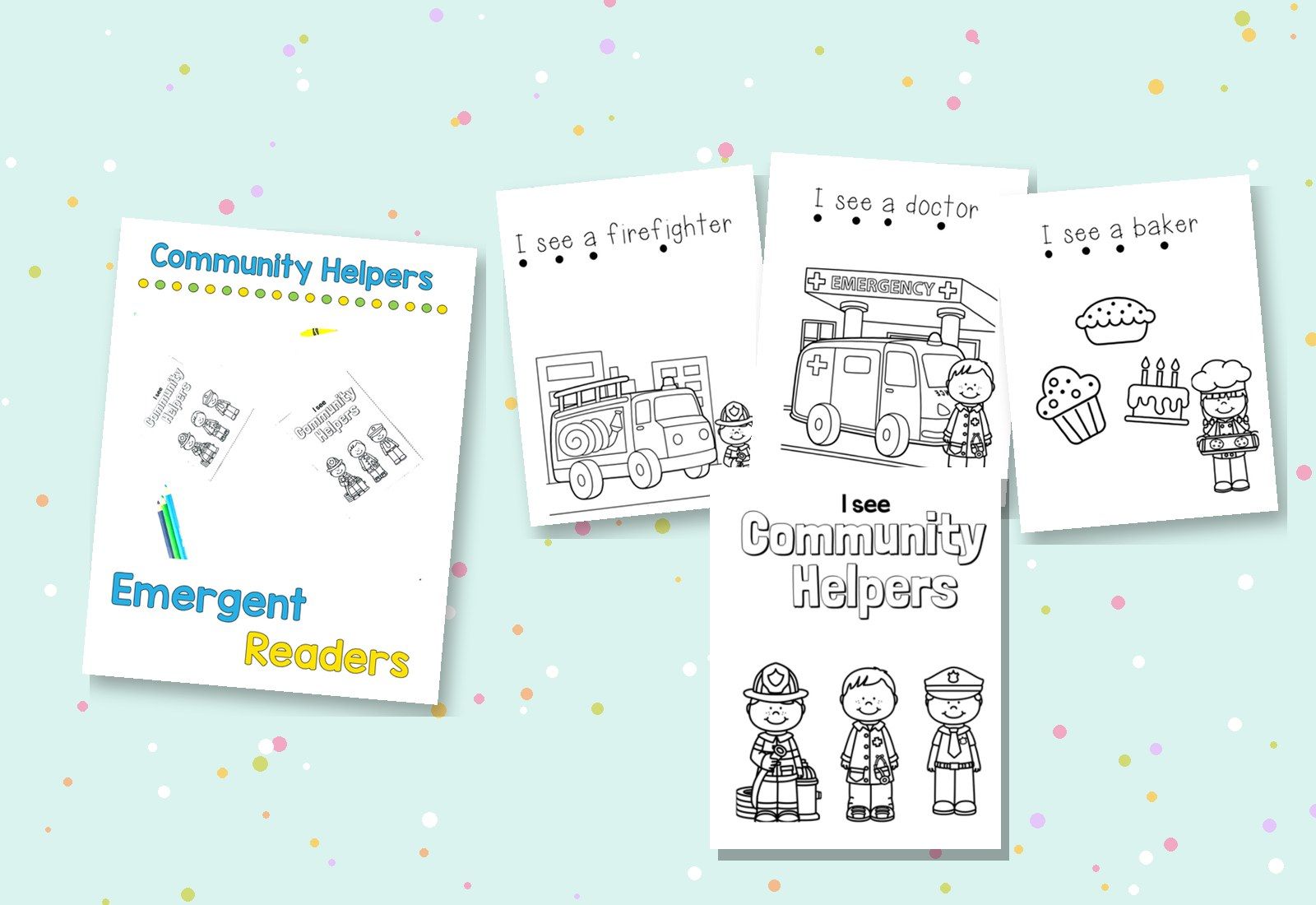
My Community Helpers Emergent Readers sight word mini book uses the pattern “I see…” with the sight words I, see, and the, plus guided reading dots so little fingers can follow along. The book features fifteen community helpers, including a firefighter, doctor, baker, mail carrier, and dentist. It is just right for beginner readers, guided reading, read-to-self, or a take-home book.
Sensory Bins and Fine Motor Ideas
Sensory and fine motor work keep this theme going after circle time without another whole-group lesson.
- Sanitation worker bin: shredded paper, clean recycled lids, and toy trucks for sorting “trash.”
- Construction bin: kinetic sand or dried beans, scoops, and toy diggers. Skip small items if children still mouth toys.
- Doctor’s tray: play dough, blunt tweezers, cotton balls, and bandages for wrapping a doll’s arm.
- Post office fine motor: peel stickers for stamps, fold paper, and push letters into a mailbox slot.
- Tool matching and road tracing: clip helper pictures to their tools with clothespins, or draw simple roads and let children drive a toy car along the line for pre-writing practice.
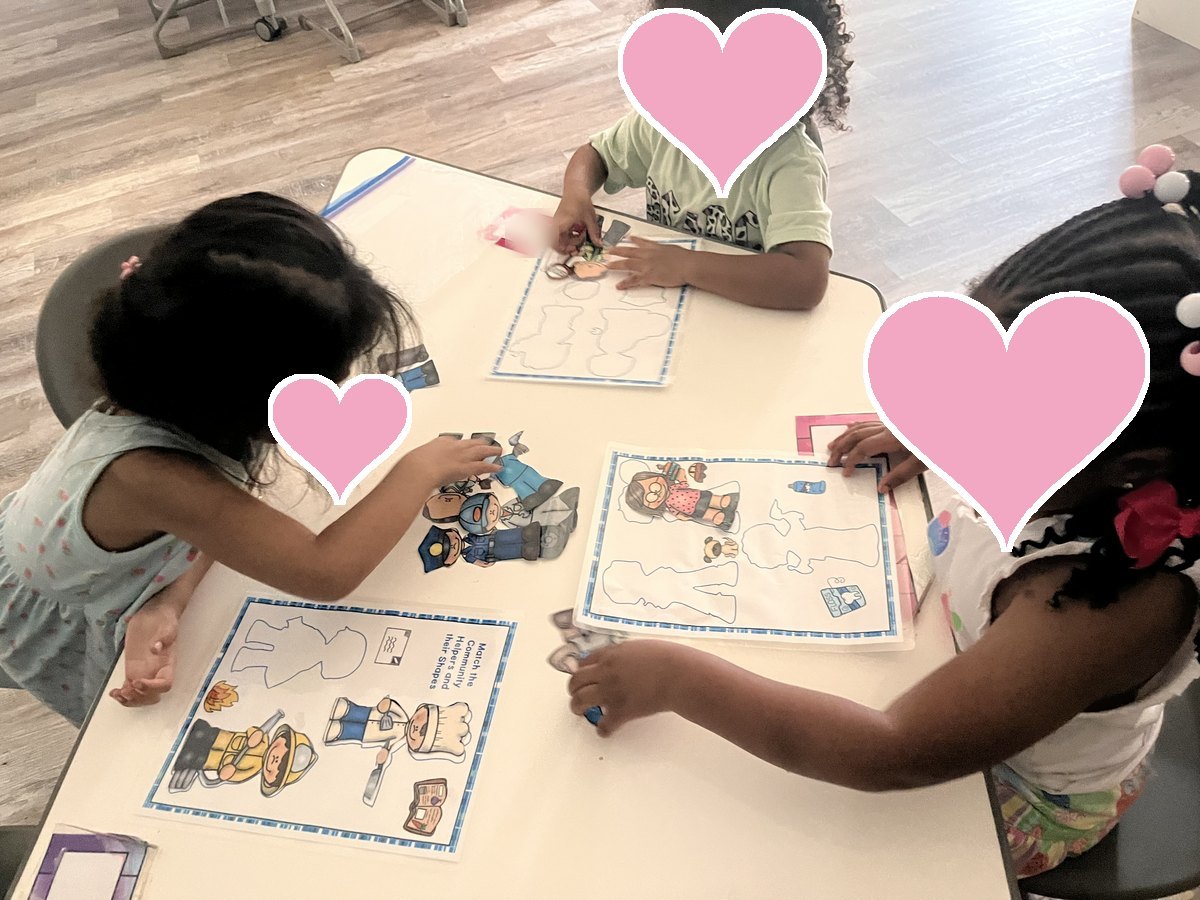
Matching community helpers to their shapes is a calm fine motor center I like to put out during this week. The children place each helper on the outline and talk about who they see as they work.
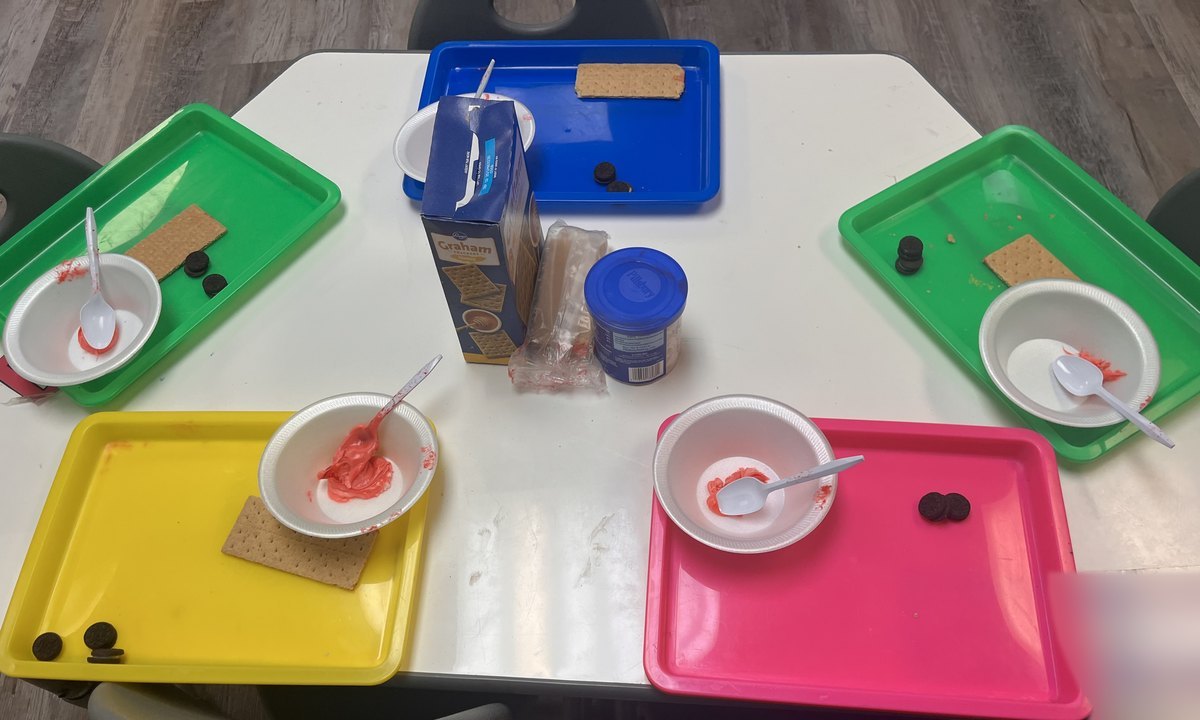
A snack or cooking center is an easy add, too. I set out graham crackers, a little frosting, and cookies on trays so each child has their own spot. It is simple, it keeps little hands busy, and it gives us one more chance to practice taking turns.
If you already use bingo in your room, a simple picture bingo with helper vehicles and tools is a fun Friday review. I share more about that in Preschool Bingo Games I Trust in My Classroom.
A Field Trip or Classroom Visitor
Nothing beats meeting a real community helper. A short visit from a firefighter, mail carrier, nurse, or librarian will be the day your children remember all year. A walking trip to a nearby post office, fire station, or library works too, if your program can do it safely.
A few things that have helped my visits go smoothly:
- Prepare the visitor. Ask them to bring one or two tools, keep the talk to about ten minutes, and plan a hands-on moment.
- Prepare the children. The day before, practice two questions: “What tools do you use?” and “How do you help our neighborhood?”
- Keep safety calm. If a firefighter or police officer visits in uniform, talk ahead of time so children know these helpers are safe people we can talk to.
- Send a thank-you the same week, or, if you cannot take a trip, watch a short video, walk the neighborhood to look for mailboxes and hydrants, or invite a family member to share about their job.
A Simple Weekly Community Helpers Plan
Here is a five-day plan you can adapt. Each day has one focus helper, one circle-time idea, and one center or craft.
- Monday, firefighters: Mystery tool bag with a toy hose or helmet, a short firefighter book, fire station play, and firefighter hats.
- Tuesday, doctors and nurses: Who Am I? clues, a doctor’s office center, and a doctor coloring page at morning work.
- Wednesday, mail carriers: Write and “mail” letters at the post office center, make mailbags, and look for real mailboxes if you can.
- Thursday, construction workers: Build a town in the block center, scoop in the construction bin, and add a coloring page or tool-matching activity.
- Friday, neighborhood review: Sing the songs, play a helper picture game, and make thank-you cards. Friday is also a lovely day for a visitor.
A week is plenty for a first look at this theme. You can always come back later in the year.
Community Helpers Preschool FAQ
What are community helpers for preschoolers?
Community helpers are the people whose jobs help a neighborhood stay safe, healthy, and cared for. For preschoolers, that usually means familiar workers like firefighters, doctors, nurses, police officers, mail carriers, bus drivers, construction workers, bakers, farmers, and teachers in the community.
Who are community helpers?
Anyone whose work helps the people around them can be a community helper. I start with the helpers children have already seen, then add a few new ones. The exact list can match your own town.
How do you teach community helpers to preschoolers?
Keep it hands-on and one helper at a time. Introduce the job with a tool, a picture, a short book, and a simple song, then let children pretend to do the work in a dramatic play center. Name the helper again when you see a real fire truck, ambulance, or mail truck.
What are good community helpers activities for preschoolers?
My go-to community helpers activities for preschoolers are a mystery tool bag, a Who Am I? clue game, dramatic play, simple crafts like hats and mailbags, coloring pages, sensory bins, and thank-you cards. Add a visitor or a short field trip if you can.
What books are good for a community helpers theme?
I like Clothesline Clues to Jobs People Do, Whose Hat Is This?, Whose Tools Are These?, Career Day, The Night Worker, and a few pages at a time of What Do People Do All Day? A simple emergent reader with a repeating sentence is a wonderful follow-up.
How long should a community helpers unit last in preschool?
One week is a great start, with one main helper each day and plenty of time to play. Some teachers stretch it to two weeks so they can add a visitor and more centers. When energy fades, wrap up with thank-you cards and come back to the theme later.
More Community Helpers Ideas for Your Classroom
I hope these ideas help you build a community helpers week your little ones will talk about for a long time. You can find more of my preschool printables in my Kimmy’s Kindergarten Corner TPT store and my online shop.
If you love theme weeks like this, you may also enjoy my animal theme preschool activities.
Want ready-to-use resources all year long? Join Clubhouse VIP, my teacher membership, for members-only printables, circle time songs and props, and seasonal resources made for little learners.
Pin this post for your next community helpers theme!