Fruit of the Spirit Activities for Preschoolers: Crafts, Songs & Bible Verse Ideas
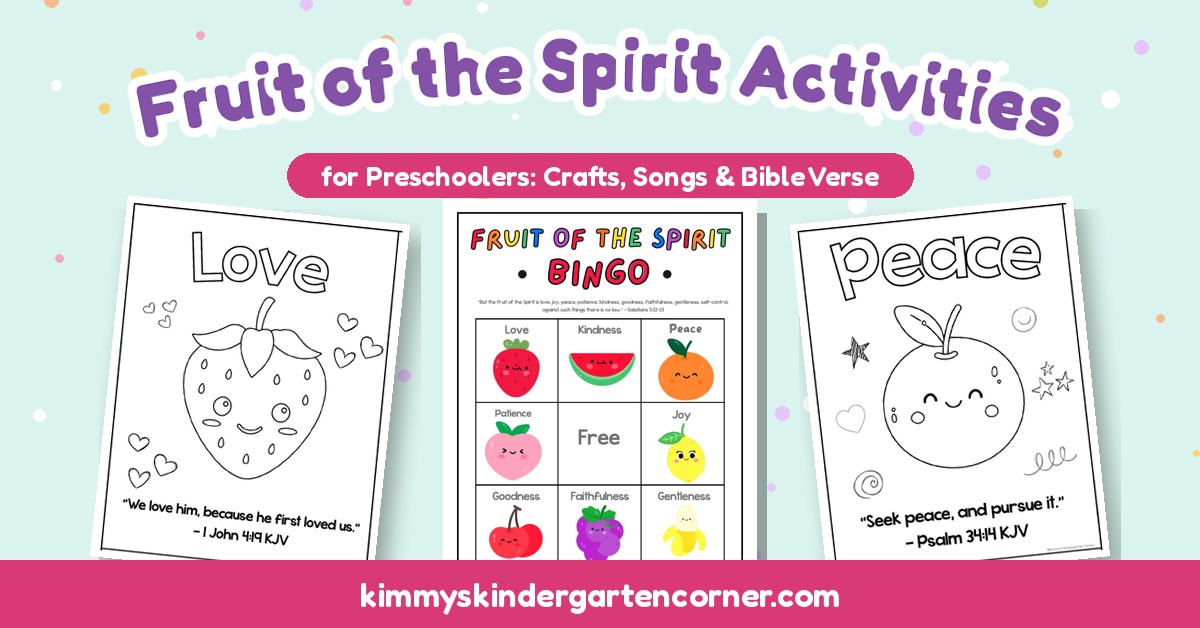
Some of the sweetest moments in my classroom have come from one simple Bible verse. A three-year-old hands a friend the red crayon he was waiting for and says, “That was kindness, right, Miss Kimmy?” Yes, sweet boy. That was kindness. And that is exactly why I love teaching the Fruit of the Spirit to little ones.
After more than ten years of teaching little ones, I have learned that young children can absolutely understand the Fruit of the Spirit. They just need it to be hands-on, repeated, and connected to real moments in their day. In this post I am sharing my favorite Fruit of the Spirit activities for preschoolers: an idea for each of the nine fruits, a circle time routine, easy crafts, simple songs, Bible verse memory tricks, games, and a weekly plan you can use right away.
Everything here works in a Christian preschool, a Sunday school room, children’s church, a homeschool, or around your kitchen table.
What Is the Fruit of the Spirit? (A Kid-Friendly Explanation)
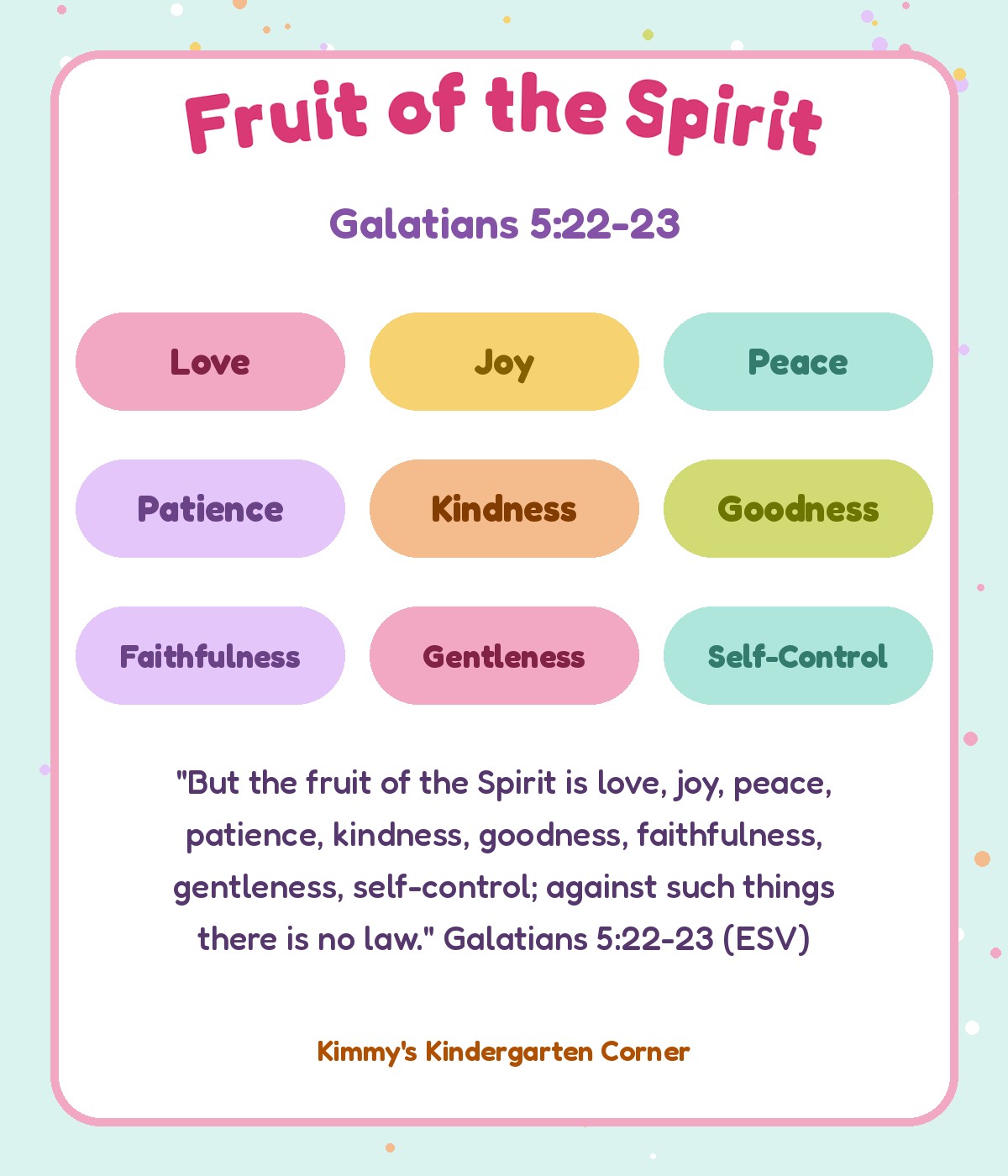
The Fruit of the Spirit comes from Galatians 5:22-23. The apostle Paul lists nine qualities that the Holy Spirit grows in the lives of people who follow Jesus:
“But the fruit of the Spirit is love, joy, peace, patience, kindness, goodness, faithfulness, gentleness, self-control; against such things there is no law.”
Galatians 5:22-23 (ESV)
Here is how I explain it to preschoolers: “An apple tree grows apples. When we love Jesus, God helps good things grow inside our hearts, like love and kindness. Other people can see that fruit by the way we act.”
That picture of a tree and its fruit is something even a two- or three-year-old can hold onto. We are not asking little ones to be perfect. We are helping them notice what God is growing in them, and celebrating it when we see it.
The 9 Fruits of the Spirit in Preschool Words
- Love: caring about people, even when it is hard.
- Joy: a happy heart because God loves me.
- Peace: a calm heart and being a friend who helps others get along.
- Patience: waiting without whining or grabbing.
- Kindness: doing and saying nice things for others.
- Goodness: choosing what is right.
- Faithfulness: keeping my promises and being someone others can count on.
- Gentleness: soft hands, soft words, and a soft voice.
- Self-control: stopping my body and my words when I need to.
Teacher tip: if you use the King James Version, a few words look different. KJV says “longsuffering” (patience), “faith” (faithfulness), “meekness” (gentleness), and “temperance” (self-control). I teach the modern words to preschoolers and mention the KJV words to older siblings or parents who ask.
How to Teach the Fruit of the Spirit to Preschoolers
Before we get to the activities, here are the four things that make the biggest difference with this age group:
- One fruit at a time. Nine fruits in one lesson is too much for little ones. I focus on one fruit for a few days or a whole week and keep reviewing the ones we already learned.
- Pair each fruit with a real fruit. Love is a strawberry, joy is a lemon, peace is an orange, and so on. Pictures make an abstract word concrete. (You will see the pairings I use below.)
- Keep lessons short. Ten to fifteen minutes of focused teaching is plenty. Then let the learning spill into play, snack time, and transitions.
- Catch them “growing fruit.” The real learning happens when you name it in the moment: “You waited so patiently for the swing! That is the fruit of patience growing in you.”
If you want to plan your weeks ahead, my free preschool lesson planner makes it easy to map out one fruit per week.
Fruit of the Spirit Activities for Preschoolers: One Idea for Each Fruit
Here is an activity for every one of the nine fruits. Each one is low-prep and uses supplies you probably already have in your classroom.
1. Love (Strawberry): Heart Helpers
Read 1 John 4:19, “We love because he first loved us.” Then cut out paper hearts and let each child give a heart to someone and tell them one thing they love about them. Keep a basket of hearts by the door all week so children can “give love” whenever they notice a friend who needs it.
2. Joy (Lemon): Joy Jumps
Joy is more than a happy face, but preschoolers learn with their whole bodies. Play upbeat worship music and call out, “Jump for joy because God loves you!” Then talk about how we can have joy even on a hard day, because God is always with us. Finish by drawing a big smiley lemon together.
3. Peace (Orange): Calm Down Breaths
Teach “smell the orange, blow out the candle” breathing. Children pretend to smell a sweet orange (breathe in slowly) and then blow out a birthday candle (breathe out slowly). Practice it during circle time so they can use it later when they feel upset. Talk about being a peacemaker who helps friends take turns and say sorry.
4. Patience (Peach): The Waiting Game
Place a small treat or a favorite toy in front of each child and set a sand timer. Their job is to wait until the sand runs out. We cheer when the timer ends! Start with thirty seconds and build up. You can also practice patience by passing one special object around the circle while everyone waits their turn.
5. Kindness (Watermelon): Kindness Seeds
Give each child a paper watermelon slice. Every time you catch them being kind, they get to add a black “seed” sticker. Read Ephesians 4:32, “Be kind to one another.” When the class fills a big classroom watermelon, celebrate with a real watermelon snack (check allergies first).
6. Goodness (Cherry): Good Choice or Not-So-Good Choice?
Hold up simple picture cards or act out short scenes: sharing blocks, grabbing a toy, helping clean up, pushing in line. Children give a thumbs up for a good choice and a thumbs down for a not-so-good choice. Then ask, “What could they do instead?” Goodness means choosing what is right, even when no one is watching.
7. Faithfulness (Grapes): Promise Keepers
Grapes grow in bunches, all held together. Talk about how God always keeps His promises, then let each child make a small promise for the day (“I will help clean up the blocks”). At the end of the day, check in and celebrate the promises they kept. Lamentations 3:23, “Great is your faithfulness,” is a great short verse for this one.
8. Gentleness (Banana): Gentle Hands Practice
A banana bruises easily, so we have to be gentle with it. Let children pass a real banana around the circle with gentle hands. Then practice gentle touches with a stuffed animal or a baby doll, and use a soft “gentle voice.” This one is especially helpful for toddlers who are still learning how to treat friends. (If biting or hitting is a struggle in your room, my post on how to stop toddler biting has more ideas.)
9. Self-Control (Apple): Freeze Dance
Freeze dance is the best self-control game I know! Play music, children dance, and when the music stops, everyone freezes. Talk about how stopping our bodies takes self-control, and so does stopping our words when we feel angry. Add Simon Says and red light, green light during the week for more practice.
Fruit of the Spirit Circle Time Ideas
Circle time is where I introduce each new fruit. Here is the simple routine I use, about 10 to 15 minutes total:
- Welcome song (1-2 minutes). Sing your usual hello song so children know circle time has started.
- Mystery fruit bag (2 minutes). Put a real or play fruit in a bag. Children feel it and guess. When you pull it out, say, “This week, our strawberry reminds us of love!”
- Bible verse (2-3 minutes). Say the verse together with hand motions (see the memory tips below).
- Short story or example (3 minutes). Tell a quick Bible story or a classroom example where someone showed that fruit.
- Practice it (3 minutes). Do the activity for that fruit from the list above.
- Prayer (1 minute). “Dear God, please help love grow in my heart today. Amen.”
Keep a Fruit of the Spirit tree on your wall and add a paper fruit each week. By the end of the unit, your tree is full, and children love pointing to each fruit and naming it.
Looking for more ideas to keep circle time and centers fresh? My post on fun and easy preschool activities is packed with them.
Fruit of the Spirit Crafts for Preschoolers
These crafts are made for little hands. No glue guns, no tricky cutting, and plenty of room for children to do the work themselves.
Paper Plate Fruit Basket
Cut one paper plate in half and staple it to a whole plate to make a pocket. Children color nine paper fruits, you (or they) write the Fruit of the Spirit word on each one, and they tuck them into the basket. The basket goes home so families can review together.
Fingerprint Fruit Tree
Trace each child’s hand and arm as a tree. Children press painted fingertips on the branches to make “fruit.” Count to nine together as they add each fingerprint and say a fruit for each one.
Fruit Prints with Real Fruit
Cut apples, oranges, and lemons in half, dip them in pink and blue paint, and stamp them on paper. While they stamp, talk about which Fruit of the Spirit each real fruit stands for.
Fruit of the Spirit Coloring Pages
Coloring is one of my favorite calm, quiet ways to review. While children color, I sit with them and ask, “What does gentleness look like?” or “When can you show patience today?” Coloring builds fine motor skills and gives you natural time to talk about God’s Word.
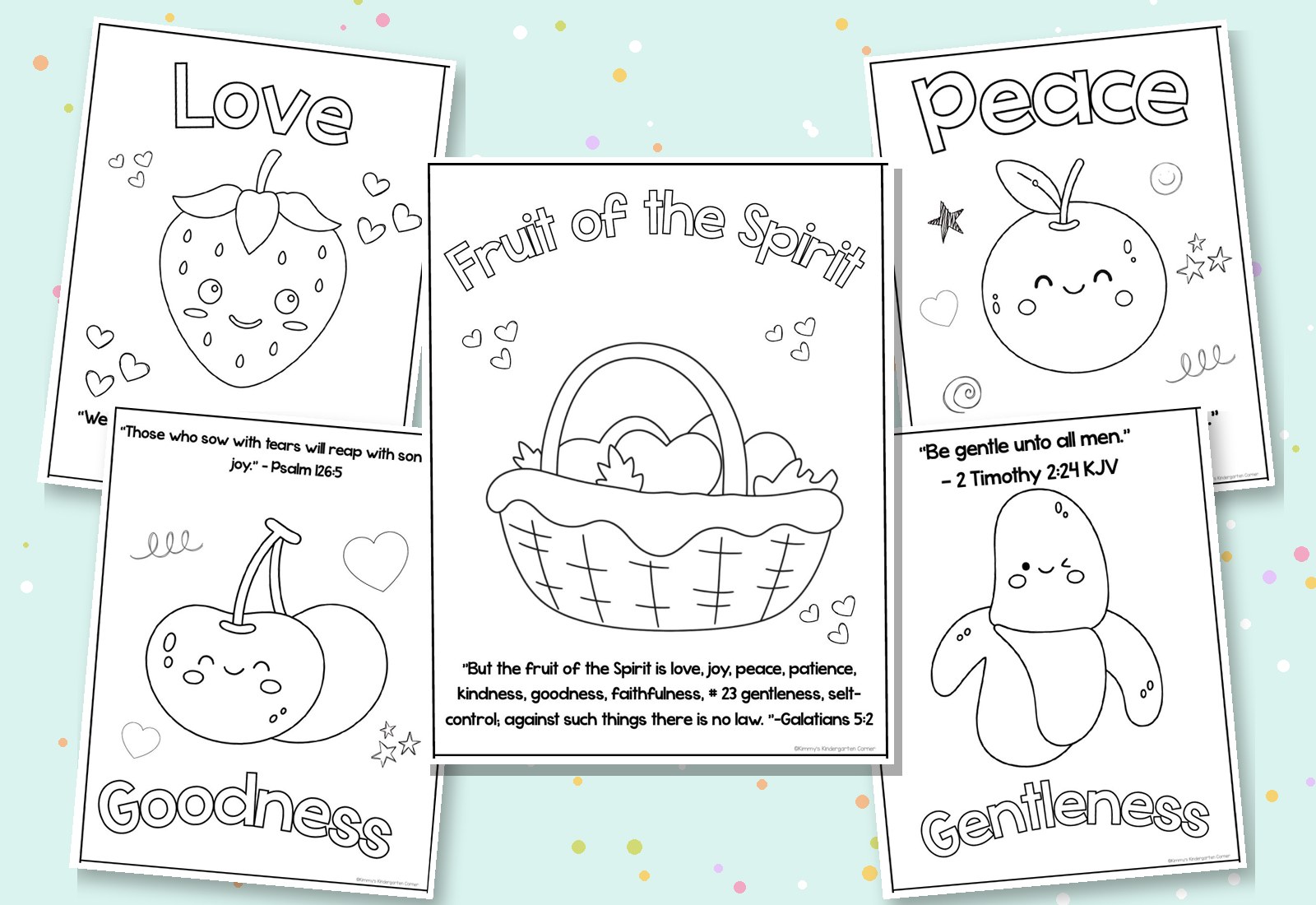
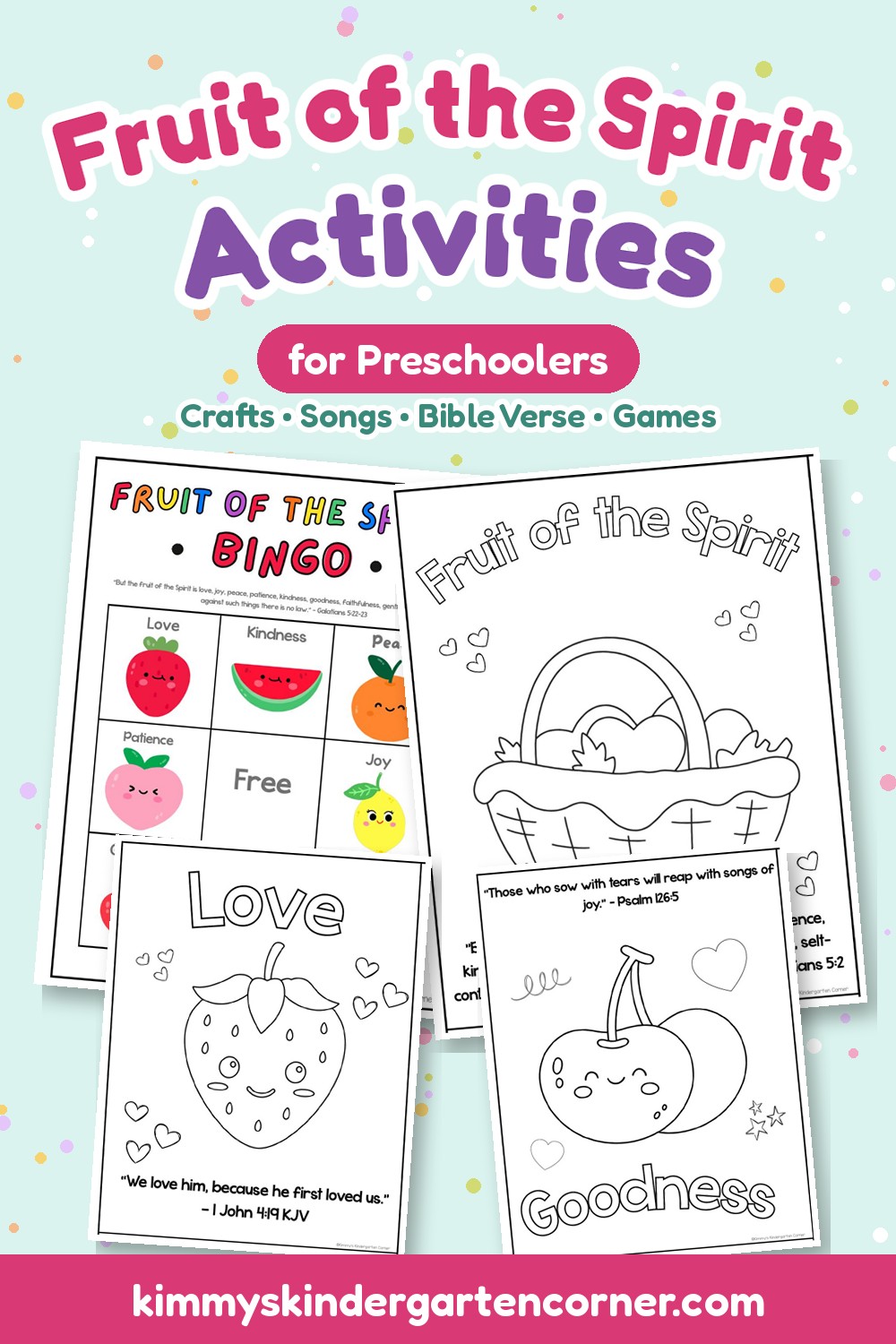
I made a set of Fruit of the Spirit Coloring Pages just for this. There is a page for each fruit with a cute fruit picture and a short Scripture, plus a Fruit of the Spirit basket page with Galatians 5:22-23. They are perfect for Bible time, morning work, centers, or Sunday school.
Fruit of the Spirit Songs for Kids
Music is how preschoolers remember almost everything! Here are two short songs I wrote to familiar tunes, so you can sing them right away without learning anything new.
“The Fruit of the Spirit” (tune: The Farmer in the Dell)
The fruit of the Spirit, the fruit of the Spirit,
Love, joy, peace, and patience,
The fruit of the Spirit.

Kindness and goodness, kindness and goodness,
Faithful, gentle, self-control,
The fruit of the Spirit!
“I Can Grow Good Fruit” (tune: Twinkle, Twinkle, Little Star)
I can grow good fruit each day,
In the things I do and say.
Love and joy and peace inside,
Patience when I wait in line.
Kind and good and gentle too,
God will help me, yes, it's true!
Add motions: hug yourself for love, jump for joy, hands folded for peace, tap your wrist like a watch for patience, and so on. Children remember the words much faster when their bodies are moving.
Want a Fruit of the Spirit song your class can sing along with on screen? Our Christian kids’ music project, Called & Commissioned Kids, made a fun one called Fruit Check! (Fruit of the Spirit Song for Kids). It goes through Galatians 5:22-23 and gets little ones up and moving.
How to Help Preschoolers Memorize Galatians 5:22-23
Yes, preschoolers can memorize Galatians 5:22-23! Here is what works in my classroom:
- Hand motions for every word. Same motions every time. Repetition is everything.
- Break it into chunks. Start with “The fruit of the Spirit is love, joy, peace.” Add three new words each week.
- Echo it. You say a phrase, they repeat it. Then try a whisper voice, a big voice, and a silly voice.
- Pass the fruit. Children pass a play fruit around the circle. Each child says the next word of the verse.
- Missing word game. Say the verse and pause. Children shout the missing word.
- Send it home. A verse card on the fridge means families practice too.
Older preschoolers can usually say all nine fruits after a few weeks. Younger children may only say a few words, and that is completely okay. Every time they hear it, God’s Word is being planted in their hearts.
Fruit of the Spirit Games for Preschoolers
Fruit of the Spirit Bingo
Bingo is one of my all-time favorite review games, and I share more about why in my post on the preschool bingo games I trust in my classroom. Bingo works beautifully for the Fruit of the Spirit because every board pairs a big, friendly fruit picture with its word, so children who can’t read yet can still play.
When you call a card, have children find the fruit and say the word with you. Then pause and ask, “Who can tell me a way to show kindness?” before you call the next one. It turns a simple game into a whole review lesson.
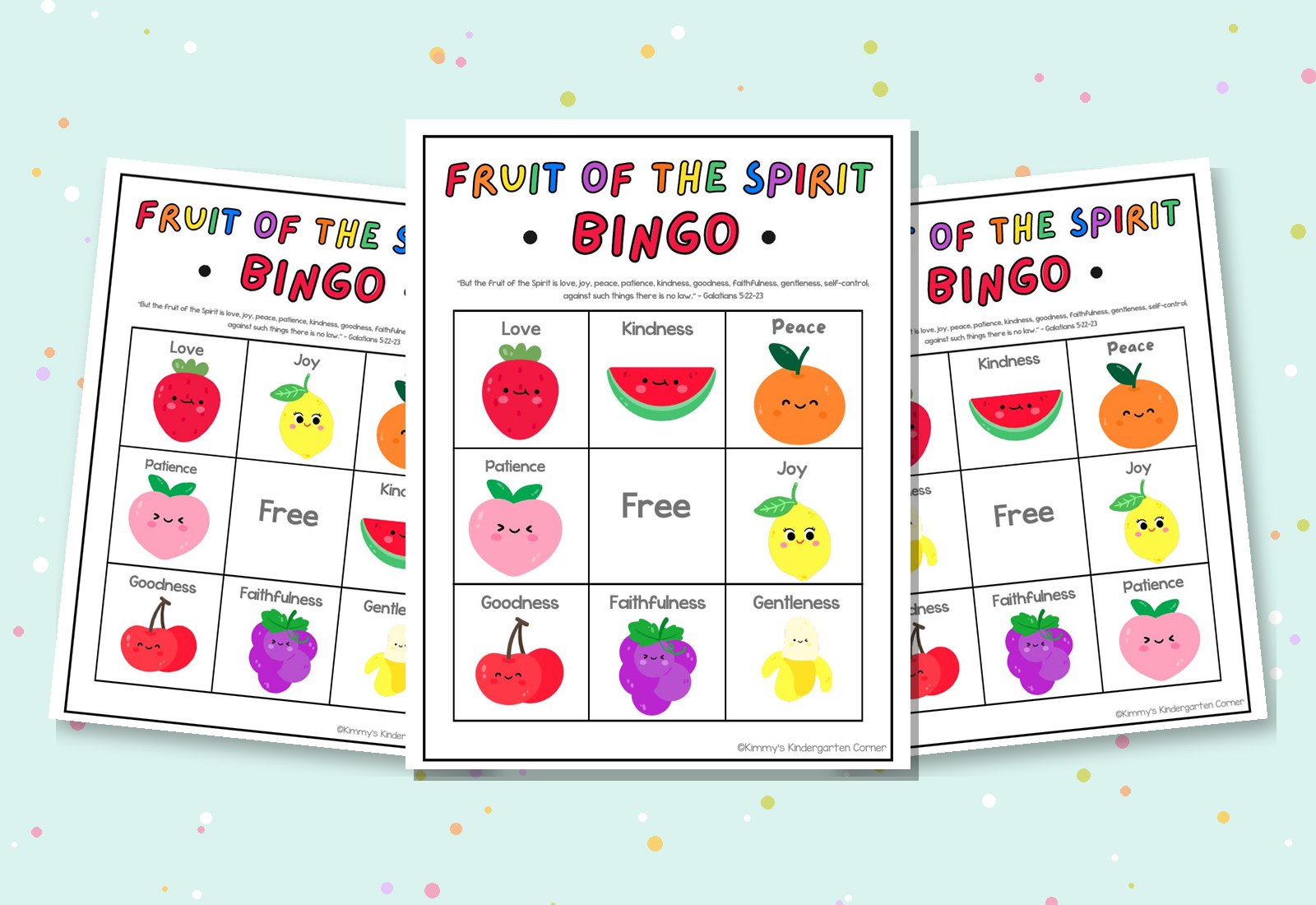
My Fruit of the Spirit Bingo includes 30 unique boards in full color and black-and-white, plus calling cards. It is low-prep and great for Bible class, small groups, centers, and class parties.
Fruit Basket Switch
Children sit in a circle of chairs and each one gets a fruit name (strawberry, lemon, orange). When you call “Strawberries!” the strawberries swap seats. Before they move, they shout the Fruit of the Spirit that goes with their fruit. Call “Fruit of the Spirit!” and everyone switches.
Good Fruit, Rotten Fruit Sort
Label paper fruits with good choices (sharing, helping, waiting) and paper “rotten” fruits with not-so-good choices (grabbing, yelling, hitting). Children sort them into a basket and a trash can. It is a simple way to talk about choices without anyone feeling singled out.
A Simple Fruit of the Spirit Weekly Plan
If you want to teach one fruit a week, here is a simple rhythm you can repeat for nine weeks:
- Monday: Introduce the fruit at circle time with the mystery fruit bag and the verse.
- Tuesday: Do that fruit’s activity from the list above.
- Wednesday: Craft or coloring page for that fruit.
- Thursday: Song and game day (bingo, freeze dance, or fruit basket switch).
- Friday: Review all the fruits so far, add the fruit to your classroom tree, and taste the real fruit at snack.
Short on time? Teach the whole set in one week by doing two or three fruits a day, then review with bingo on Friday.
Tips for Teaching the Fruit of the Spirit to Toddlers
Toddlers (ages 1 to 3) can enjoy the Fruit of the Spirit too. Just keep it very simple:
- Focus on three fruits: love, kindness, and gentleness. These show up in toddler life all day long.
- Use real fruit they can touch, smell, and taste.
- Sing the same short song every day.
- Name it constantly: “Gentle hands! That is gentleness.”
- Skip crafts with small pieces and choose big crayons, sticker fruit, and fruit stamping instead.
Fruit of the Spirit FAQ
What are the 9 fruits of the Spirit?
The nine fruits of the Spirit from Galatians 5:22-23 are love, joy, peace, patience, kindness, goodness, faithfulness, gentleness, and self-control. Some people search for “7 fruits” or “5 fruits,” but Galatians lists nine.
Is it “fruit” or “fruits” of the Spirit?
The Bible says “fruit” (singular), as in “the fruit of the Spirit is love, joy, peace…” Many teachers explain it as one fruit with nine parts, like one bunch of grapes. You will hear both, and preschoolers do not need to worry about the difference.
How do you explain the fruit of the Spirit to a preschooler?
Use a tree. “An apple tree grows apples. When we love Jesus, God grows good things in our hearts like love, kindness, and patience. People can see that fruit in how we treat them.” Then point out real moments when children show that fruit.
Where is the fruit of the Spirit in the Bible?
The fruit of the Spirit is found in Galatians 5:22-23, in a letter the apostle Paul wrote to the churches in Galatia.
What age can kids learn the fruit of the Spirit?
Children as young as two can start learning simple words like love, kindness, and gentleness. By ages four and five, many children can name all nine and say the verse with hand motions.
How long should a Fruit of the Spirit lesson be for preschool?
About 10 to 15 minutes of focused teaching, followed by play-based activities, crafts, and songs throughout the day or week.
More Ways to Grow Good Fruit in Your Classroom
I hope these ideas help you plant God’s Word in your little ones’ hearts. You can find more of my faith-based and preschool printables in my Kimmy’s Kindergarten Corner TPT store and my online shop.
Want ready-to-use resources all year long? Join Clubhouse VIP, my teacher membership, for members-only printables, circle time songs and props, and seasonal resources made for little learners.
Pin this post so you can find it again when you plan your next Bible unit!