Indoor Activities for Kids: 25 Winter & Rainy Day Ideas for Preschool
Cold mornings, rainy afternoons and indoor recess days can make even the happiest classroom a little stir crazy . The good news? A few simple indoor activities for kids can turn a “stuck inside” day into one of the best days of the week. In this post I’m sharing my favorite winter and rainy day ideas for preschool and kindergarten friends ages 3 to 5: movement games that burn energy, calm fine motor work, hands-on math and literacy, sensory play, and a simple plan to pull it all together.
Why Indoor Activities Matter for Little Learners
Preschoolers need to move, touch, build and talk all day long. When the winter weather keeps us inside, that need doesn’t go away. It just needs a new place to go! A plan full of indoor activities for preschoolers helps you:
- Give toddler bodies a safe way to release energy
- Keep your routines steady, this will help your preschool kids feel secure
- You can practice real skills (counting, pre-writing, listening) through play
- You can prevent the mid-afternoon meltdown that comes from too much sitting
The secret is balance. Alternate a “big body” activity with a “calm hands” activity, and your day will flow much more smoothly.
Before You Start: Set Up a Safe Indoor Play Space
A little prep makes every indoor game safer and easier:
- Clear a runway. Push chairs and tables to the edges and check for hard corners at head height.
- Bare feet or grippy socks. Smooth socks on hard floors cause slips.
- Soft things only for tossing. Beanbags, pom-poms, foam balls or rolled-up socks.
- One clear rule per game. Short, simple directions keep everyone on track.
- Stay close. Any climbing or balancing game needs a grown-up nearby.
Indoor Gross Motor Activities for Preschoolers
These are the most-searched indoor activities for kids for a reason. They get the wiggles out fast, and most take less than a minute to set up.
1. Snowflake Freeze Dance
Play upbeat music and let kids dance. When the music stops, call out “Freeze like a snowflake!” Switch it up with “Freeze like a snowman,” “Freeze like a penguin,” or “Melt like snow in the sun.” This builds listening and self-control along with big muscles.
2. Winter Animal Moves
Call out an animal and have children move like it across the room: waddle like a penguin, stomp like a polar bear, hop like an arctic hare, slide like a seal, or tiptoe like a fox. Heavy movements like bear crawls are also wonderfully calming.
3. Masking Tape Balance Lines
Put painter’s tape on the floor in a straight line, a zigzag and a big circle. Kids walk forward, backward, sideways and heel-to-toe. For older 4s and 5s, add a beanbag on the head! Bonus: those same lines match the pre-writing strokes they’ll trace later.
4. Indoor “Snowball” Toss
Crumple white paper or use cotton balls and pom-poms as snowballs. Kids toss them into laundry baskets or buckets. Label each basket with a number and have children count how many snowballs they get in.
5. Paper Plate Ice Skating
Give each child two paper plates to stand on (this works best on carpet) and let them “skate” around the room to music. It’s silly, it’s fun, and it works leg muscles and balance.
6. Parachute or Bedsheet Blizzard
Put soft white balls or pom-poms on a parachute or old sheet. Children shake it together to make a “blizzard” and try to keep the snow on as long as they can. This is great for teamwork and turn-taking.
7. Pillow Path Obstacle Course
Lay out cushions as “icebergs,” a table to crawl under as an “ice cave,” and a tape line to balance on. Children go through three times, then you change the layout. Little friends love helping design the next course.
8. Red Light, Green Light (Snowman Edition)
Green means go, red means freeze like a snowman, and yellow means slow motion “melting.” The stopping is the whole point because it strengthens impulse control.
Calm Fine Motor Activities for Indoor Days
After big movement, little bodies are ready to slow down. Fine motor activities are perfect for this “calm hands” time, and they build the hand strength children need for writing.
9. Winter Tracing Lines
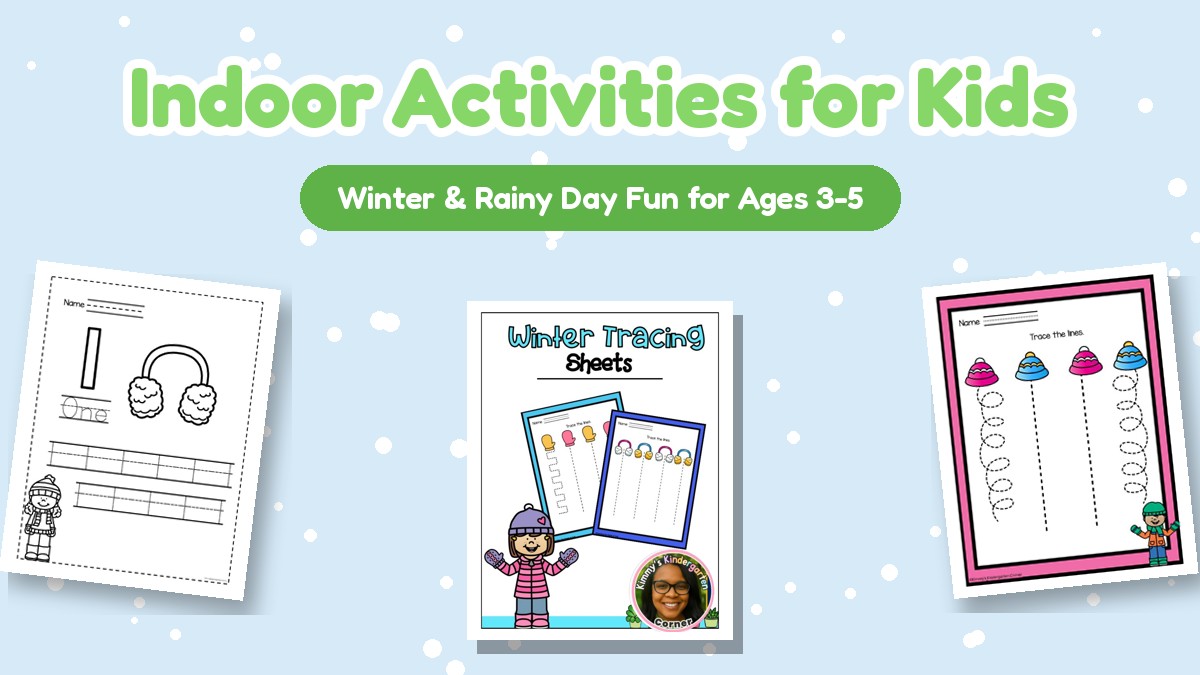
Tracing pages are my go-to quiet activity on indoor days. Children follow straight, zigzag, curvy and loopy paths from mittens, hats, earmuffs, ice skates and snowflakes. Each path practices a pre-writing stroke that later becomes part of letters.
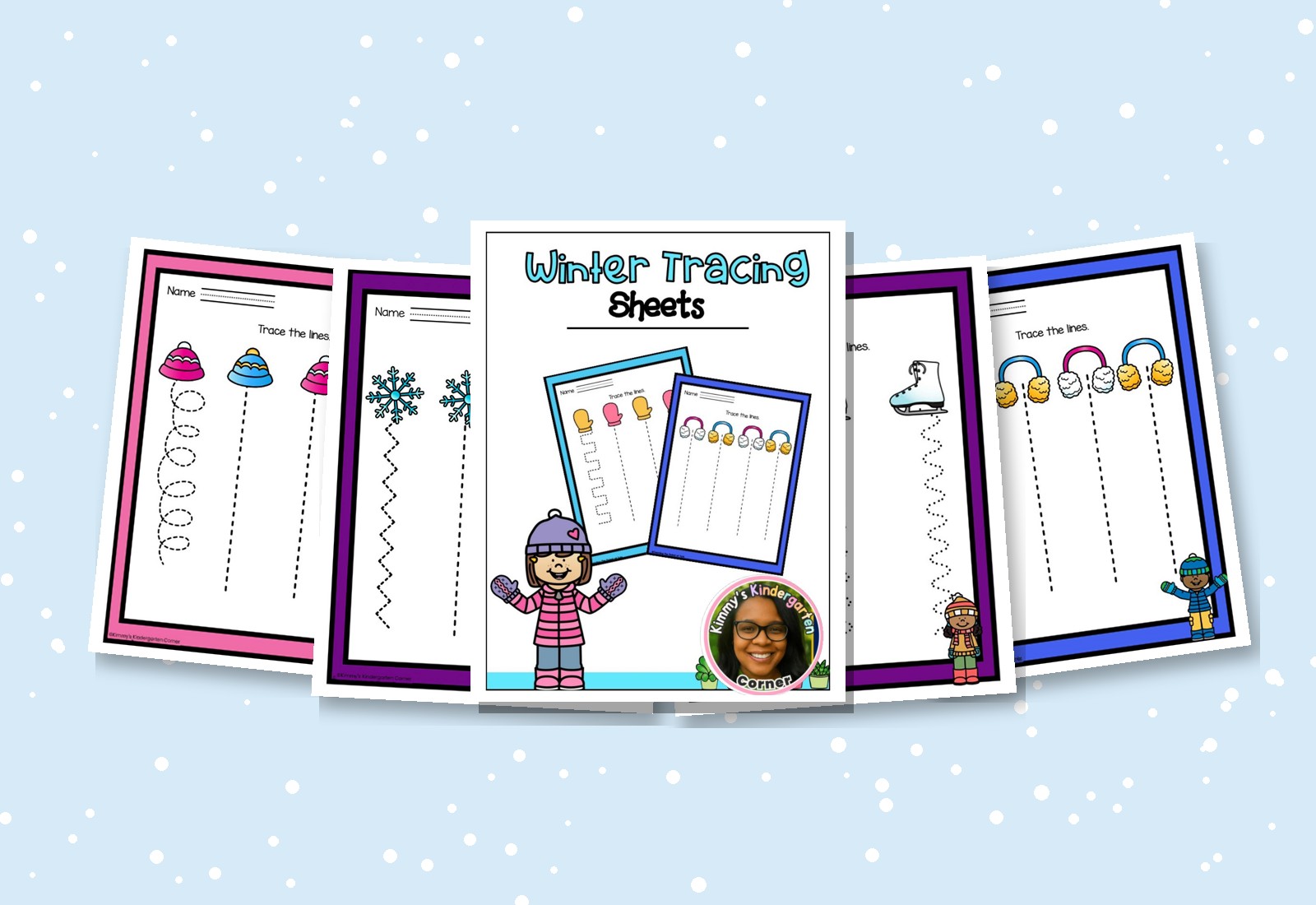
My Winter Tracing Lines set is no-prep: just print and go. Slide pages into sheet protectors or laminate them and use dry-erase markers so you can reuse them all winter long.
Also available on TPT.
10. Playdough Snowmen
Roll three balls, stack them up, and add toothpick arms, bead buttons and a scrap of ribbon for a scarf. Rolling and squishing builds hand strength, and you can ask “Which ball is biggest? Smallest?” for some sneaky math talk.
11. Pom-Pom Snowball Transfer
Kids use tongs, clothespins or tweezers to move white pom-poms from one bowl to another or into an ice cube tray. Add a number die to roll and transfer that many.
12. Mitten Lacing Cards
Cut mitten shapes from cardstock, punch holes around the edges and let children lace yarn through. It’s a great bilateral coordination activity for a quiet corner.
13. Sticker Snowflakes
Peeling stickers is harder than it looks! Draw a snowflake outline and have kids cover the lines with small dot stickers.
Indoor Math Activities for Kids
Indoor days are perfect for hands-on math at the table or on the rug.
14. Number Tracing and Counting
Children trace a number, write it, and count the matching winter pictures. Keep a few pages ready for morning work, early finishers, or the last 10 minutes before pickup.
My Winter Number Tracing Worksheets 1-20 pair snowy pictures with number formation and counting practice. They’re no-prep, and they work great laminated for dry-erase practice too.
Also available on TPT.
15. Mitten Matching
Cut out pairs of paper mittens with matching patterns, colors or numbers and hide one of each pair around the room. Kids hunt for the partner and “clip” them together on a yarn clothesline.
16. Snowball Measuring
Use cotton balls to measure toys, books and blocks. “This book is 6 snowballs long!” It’s a gentle introduction to non-standard measurement.
17. Hot Cocoa Marshmallow Count
Draw cocoa mugs with numbers on them and have children drop in the matching number of mini marshmallows or white pom-poms. Keep real marshmallows for snack time only!
Indoor Literacy Activities for Preschool and Kindergarten
18. Winter Word Tracing
Older preschoolers and kindergarteners love tracing “big kid” words. Winter vocabulary like snowflake, scarf and ice skates connects new words with letter formation.
My Winter Word Tracing Handwriting Practice pages are made for exactly that. They’re great for writing centers, morning work, or a cozy table activity.
Also available on TPT.
19. Flashlight Letter Hunt
Dim the lights, tape letters around the room and give kids a flashlight. They find a letter, say its name or sound, and do an action (jump for J, wiggle for W). Indoor days feel like an adventure!
20. Blanket Fort Reading Nook
Drape a sheet over two chairs, add pillows and a basket of winter picture books. A cozy fort makes reading time feel special and gives overstimulated friends a calm place to reset.
21. Rhyming Snowball Toss
Say a word like “hat” and toss a soft snowball to a child, who says a rhyme (“cat!”) and tosses it back. It’s phonological awareness with movement.
Indoor Sensory and Science Activities
22. Ice Excavation
Freeze small toys in a container of water overnight. Children use droppers of warm water, salt and spoons to rescue them. Talk about what makes the ice melt faster.
23. Fake Snow Sensory Bin
Mix baking soda with a little white conditioner or water until it’s crumbly and cold. Add scoops, small cups and toy animals. Keep a towel nearby and supervise closely.
24. Melting Snowman Experiment
Place a snowball (or ice cubes) in a clear cup and check on it every 15 minutes. Kids predict, draw what they see and talk about changes.
25. Rainy Day Sound Jar
Fill jars with rice, beans or beads and listen to the “rain.” Kids shake them to music and match loud and soft sounds.
Winter Circle Time Activities for Indoor Days
Circle time is the heart of an indoor day. It brings everyone back together between active play and quiet work. Songs, fingerplays, and props help little ones listen, count, and take turns, especially after a long winter break.
My Winter Circle Time Activities, Games & Props set includes snowy songs, games and props to help you settle children back into routines and build counting, colors, listening and turn-taking. It’s perfect for snow days and transitions.
Also available on TPT.
A Simple Indoor Day Plan for Ages 3-5
Here’s how I put these indoor activities for kids together on a snowy or rainy day:
- Arrival: Number tracing or playdough snowmen at the tables
- Circle time: Winter songs, a fingerplay and a counting game
- Big body break: Snowflake freeze dance and winter animal moves
- Centers: Tracing lines, pom-pom transfer, fake snow bin and blanket fort books
- Gross motor block: Pillow path obstacle course or parachute blizzard
- Quiet time: Sound jars and picture books
- Afternoon: Ice excavation or the melting snowman experiment
- Closing circle: Talk about the day and a rhyming snowball toss
Notice the pattern: move, calm, move, calm. That rhythm is what keeps indoor days happy.
Tips for Making Indoor Days Easier
- Make an “indoor day bin.” Keep tape, beanbags, pom-poms, a playlist and printed pages ready so you can grab it the moment the weather turns.
- Laminate once, use all season. Dry-erase tracing pages save paper and prep time.
- Use visual timers. Children handle transitions better when they can see how long is left.
- Offer choices. Two or three options help kids feel in control.
- Get outside if you safely can. Even five minutes of fresh air can reset the room.
Indoor Activities for Kids: Frequently Asked Questions
What are good indoor activities for preschoolers?
Mix gross motor games (freeze dance, animal moves, obstacle courses) with calm fine motor activities (tracing, playdough, lacing) and hands-on math, literacy and sensory play.
How do I keep kids active indoors with little space?
Choose games that move in place: freeze dance, Simon Says, animal moves and tape balance lines all work in a small room or hallway.
Are these activities good for kindergarten too?
Yes! Add challenge with numbers to 20, word tracing, rhyming and longer obstacle courses.
Join Clubhouse VIP for More Ready-to-Use Resources
Want fresh seasonal printables and circle time resources without the planning stress? Join Clubhouse VIP, my teacher membership, and get members-only resources for your classroom all year long.
Pin This for Later
I hope these ideas help you turn your next snowy or rainy day into a joyful, learning-filled day. Save this post so it’s ready the next time the weather keeps you inside!